A life in baseball. A family’s story.
Jack Kloza
From Milwaukee’s sandlots to the big leagues—and back to the kids who kept the game alive.
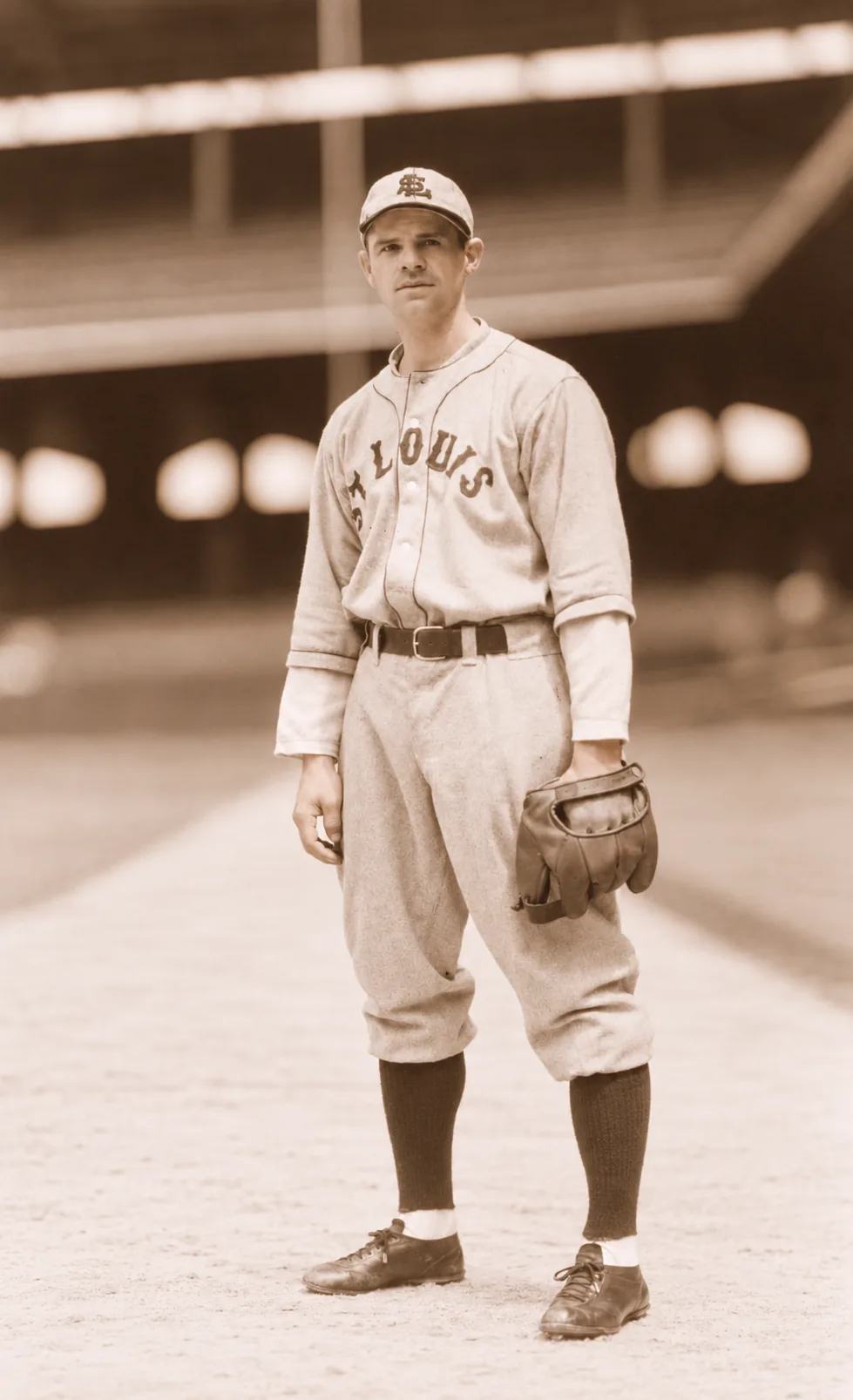
Read his storyJack in a St. Louis uniform
Photographer and date to be confirmed
The record books
call him “Nap.”
The people who knew him
called him Jack.
He hit .404 in Albany, played for the St. Louis Browns, managed the 1944 Rockford Peaches, and put thousands of Milwaukee kids on ballfields.
A long way
from home.
Early career
Jack Kloza was born Jan Klojzy on Sept. 7, 1903, in Siedliska, in the part of Austria-Hungary called Galicia. It’s in Poland now. Several places carry that name, and no one has settled which was his. In 1908, he and his mother, Franciszka, and his sister, Marta, joined his father, Wawrzyniec, in Milwaukee.
He grew up in the city’s Polish 13th Ward and became a hard-hitting teenage catcher for its amateur clubs. In 1924, the semi-pro Bonita Kandy Kids paid him $5 a game. Record books call him “Nap,” but the newspaper stories Gary Cieradkowski collected never do. They call him Jack.
His break came from a hat maker. George “Stormy” Kromer, the Milwaukee semi-pro who invented the Stormy Kromer cap, bought the 1925 Blytheville Tigers of the Class D Tri-State League. The Tigers went 31-77 and lost 35 straight. Jack hit .373, the best in the league, and Blytheville sold him to Birmingham.
At Albany in 1927, he hit .404 with 28 home runs, and local writers called him the “Babe Ruth of the Southeast.” Brooklyn reportedly paid $65,000 for his contract, but the deal collapsed. Connie Mack’s $25,000 bid came up short.
The Washington Senators bought his contract for 1928, and he led their hitters at .750 after 10 spring games in Tampa. Then he caught malaria and lost 40 pounds. Washington optioned him to Louisville, where he hit .100, and he landed in Chattanooga.
He rebuilt at Montgomery, hitting .299 in 1929. He married Rose Ronowski there on Sept. 7, his 26th birthday. A year later, he hit .347 with 28 home runs at Wichita Falls.
The big leagues.
The long road.
Professional career
Milwaukee bought him next, and he hit .319 with 22 home runs for the 1931 Brewers, the American Association club of that era. The St. Louis Browns first tried to get him in a trade, but Commissioner Kenesaw Mountain Landis voided it. They then bought his contract outright, and he debuted Aug. 16, 1931.
His big league stay lasted parts of two seasons. In spring 1932, a George Blaeholder pitch hit his wrist and cost him weeks, and Red Kress’s return from a holdout pushed him to the bench. On May 24, he pinch-hit an RBI triple in a seven-run rally to beat Detroit. He finished at .150 in 22 games, one of four major leaguers born in what’s now Poland.
Milwaukee was where he starred. He returned to the Brewers in 1933, and in 1934 he hit .326 with 26 home runs. Then he ran into a telephone pole that formed part of the Borchert Field outfield wall. The crash wrecked his right elbow, and surgery didn’t restore it. He managed two hits in 19 games in 1936, and the Brewers released him before the 1937 season.
big league games.
St. Louis Browns, 1931 to 1932: three hits in 20 at-bats. A .150 average.
Every stop, one pennant.
1925–1936 · The season record
| Year | Club & league | Games | HR | AVG | Batting average pennant |
|---|---|---|---|---|---|
| 1925 | Blytheville TigersTri-State | 59 | 7 | .373 | |
| 1926 | Alexandria RedsCotton States | 11 | 0 | .317 | |
| 1926 | Montgomery LionsSoutheastern | 114 | 9 | .379 | |
| 1927 | Albany NutsSoutheastern | 122 | 28 | .404 | |
| 1927 | Birmingham BaronsSouthern Association | 19 | 2 | .255 | |
| 1928 | Louisville ColonelsAmerican Association | 16 | 0 | .100 | |
| 1928 | Chattanooga and NashvilleSouthern Association | 27 | 0 | .182 | |
| 1929 | Montgomery LionsSoutheastern | 141 | 8 | .299 | |
| 1930 | Wichita Falls SpuddersTexas | 153 | 28 | .347 | |
| 1931 | Milwaukee BrewersAmerican Association | 133 | 22 | .319 | |
| 1931 | St. Louis BrownsAmerican League · Major leagues | 3 | 0 | .143 | |
| 1932 | St. Louis BrownsAmerican League · Major leagues | 19 | 0 | .154 | |
| 1932 | Wichita Falls and LongviewTexas | 67 | 5 | .265 | |
| 1933 | Milwaukee BrewersAmerican Association | 89 | 9 | .292 | |
| 1934 | Milwaukee BrewersAmerican Association | 152 | 26 | .326 | |
| 1935 | Milwaukee BrewersAmerican Association | 95 | 8 | .305 | |
| 1936 | Milwaukee BrewersAmerican Association | 19 | 1 | .111 |
Each pennant’s length shows his batting average. Gold marks his 22 big league games. His minor league lines add up to 1,217 games and 153 home runs.
Coaching · Milwaukee & Rockford
The game went on.
So did Jack.
boys found a place to play.The Stars of Yesteryear league eventually passed this mark.
Milwaukee’s sandlots
Jack stayed in the game after his elbow gave out. With Anthony “Bunny” Brief, another Milwaukee big leaguer, he built the Stars of Yesteryear youth league. Brief ran the South Side, and Jack ran the North Side. By 1944 the league had 85 teams and 6,500 kids.
Rockford, 1944
In 1944, the Rockford Peaches of the All-American Girls Professional Baseball League hired him as manager. Dottie Kamenshek played first base. The Peaches were 24-32 when he left in mid-July.
Newspapers disagreed on why, with some reporting a dispute with the league office in Chicago, and Jack wouldn’t say. Bill Allington ran the club after him. Jack is part of the league’s permanent display at the Baseball Hall of Fame in Cooperstown, New York.
Beyond the
ballfield.
Life after coaching
The public record thins out here. His son caught for Milwaukee’s team at the 1952 Hearst Sandlot Classic in New York. Jack died in Milwaukee on June 11, 1962, at 58. His wife, Rose, and their children survived him, and he’s buried at Holy Cross Cemetery in Milwaukee.
The family’s stories go here: his work, his friends, and what he was like at home.
Photographer and date to be confirmed.
The family archive
A life, still
being collected.
There’s one photo so far. The family’s photographs and memories will help fill in the rest.
Places for the next photographs
- Albany, 1927
- Borchert Field, Milwaukee
- With the Browns, 1931 to 1932
- Stars of Yesteryear
- Rockford, 1944
- Jack and his family
The story.
The sources.
History leaves a record.
Sometimes, more than one.
Where the sources disagree
Birthplace: older copies of Wikipedia say Warsaw. Current Wikipedia and Cieradkowski say Siedliska, and this site uses Siedliska.
The 1944 Peaches: Wikipedia and the league’s site give 25-23 and third place, but the league’s text credits Wikipedia, so it isn’t a second source. Published standings show Rockford at 24-32 in the first half and 29-28 in the second, which fits Cieradkowski’s 24-32.
Minor league totals: Wikipedia says .312, and Cieradkowski says .329 with 129 home runs. The Stats Crew season lines add up to 1,217 games, 153 home runs, and about .327. Those lines list the same 1928 record under both Chattanooga and Nashville, and this site counts it once.
What this site draws on
- Gary Cieradkowski, “Jack Kloza: Home Runs, Mosquitos, Hats and the Rockford Peaches”
- Wikipedia, “Nap Kloza”
- Wikipedia, 1944 AAGPBL season standings
- Baseball-Reference, big league batting
- Stats Crew, minor league batting
- Stats Crew, 1944 Rockford Peaches
- All-American Girls Professional Baseball League, profile